Point-to-point: the straight line
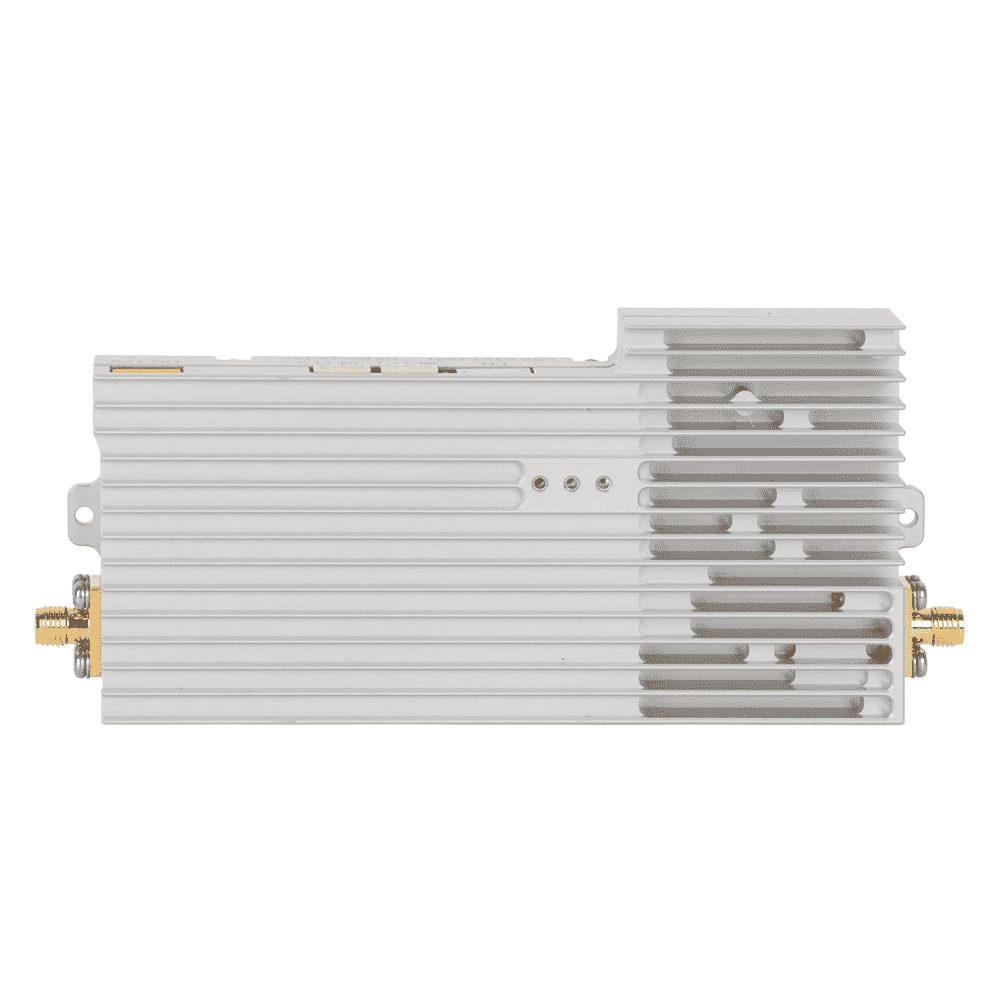
A point-to-point link is one transmitter, one receiver, all the airtime. It delivers the highest effective throughput per gram and per watt, the simplest failure model, and the lowest latency. For one aircraft serving one ground station — the majority of single-drone missions — it is the right answer.
Its weakness is geometry: if the direct path degrades or breaks, there is no fallback. And it serves exactly one link; nothing is shared with a second aircraft.
Mesh: the network that builds itself
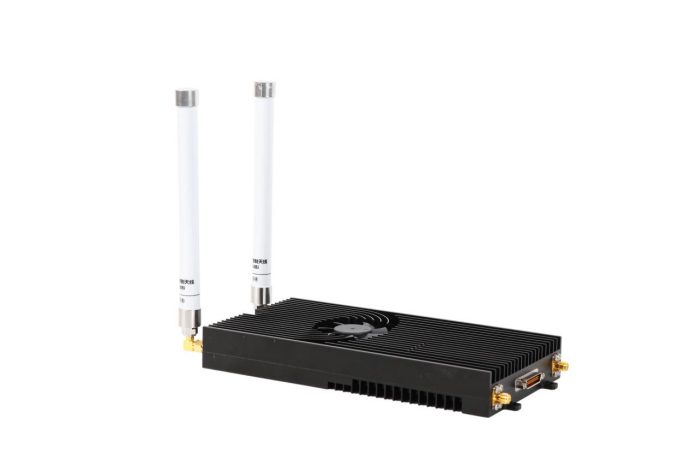
A mesh network forms automatically among all nodes in range. Each node relays for the others, so coverage extends hop by hop, nodes can join and leave, and the network routes around a lost unit. The published mesh models carry standard IP over Ethernet with node support up to 64 depending on model.
The cost is physics, not marketing: every hop retransmits, and nodes share airtime. Per-node effective throughput falls as the network grows, and multi-hop paths add latency on top of the 150 ms class radio latency.
Choosing by mission shape
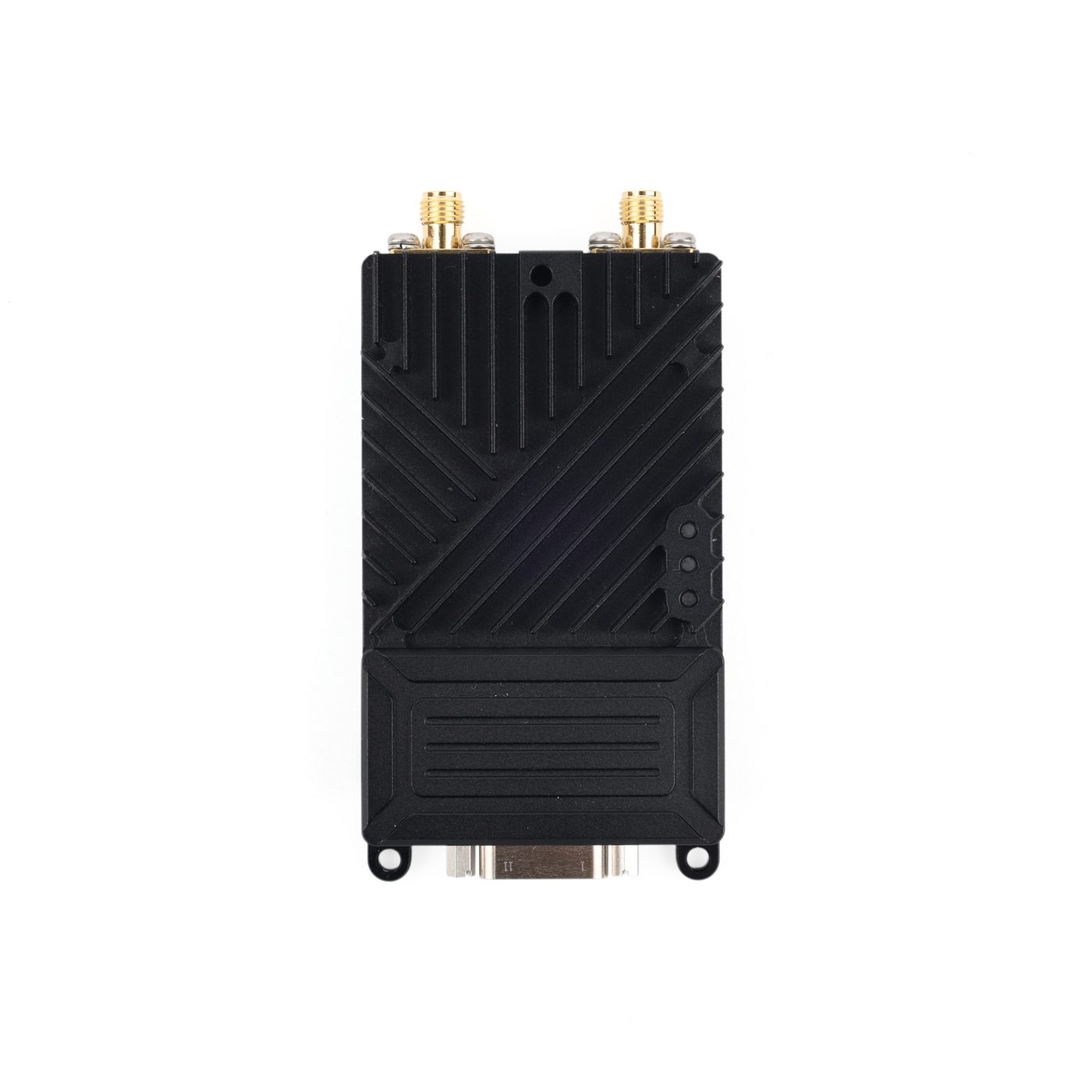
Choose point-to-point when: one aircraft, one ground station, payload throughput is the priority, and mass/power budgets are tight. The Standard series modules (from 104 g) are the reference points.
Choose mesh when: multiple aircraft or crew positions must share data, the mission must survive a lost node, or the ground side moves through terrain that breaks fixed geometry. The mesh series spans 10–100 km per hop under LOS reference conditions.
The hybrid reality
Larger systems often combine both: a high-throughput point-to-point link carries the primary video from the lead aircraft, while a small mesh network ties the swarm or the ground team together. The catalog supports mixing families — the integration guide covers the interface side.
What does not work is expecting mesh to also deliver dedicated-link throughput. Size the mesh for what it must carry after sharing, and keep the heavy payload on the direct link.